
Every year, millions of tourists search for the perfect beach. They Google it, ask friends, scroll through Instagram. And somewhere in that process, they stumble upon a small place on the Croatian coast they can barely believe exists.
Punta Rata in Brela is not a beach that demands attention. No theme parks, no music thumping until midnight. It has something rarer, the kind of beauty that makes you stop, put your phone down, and simply look.
American Forbes took notice and named Punta Rata one of the 10 most beautiful beaches in the world. We can’t say it surprised us, but it does make us proud.
Brela Stone: The Symbol That Holds a Secret
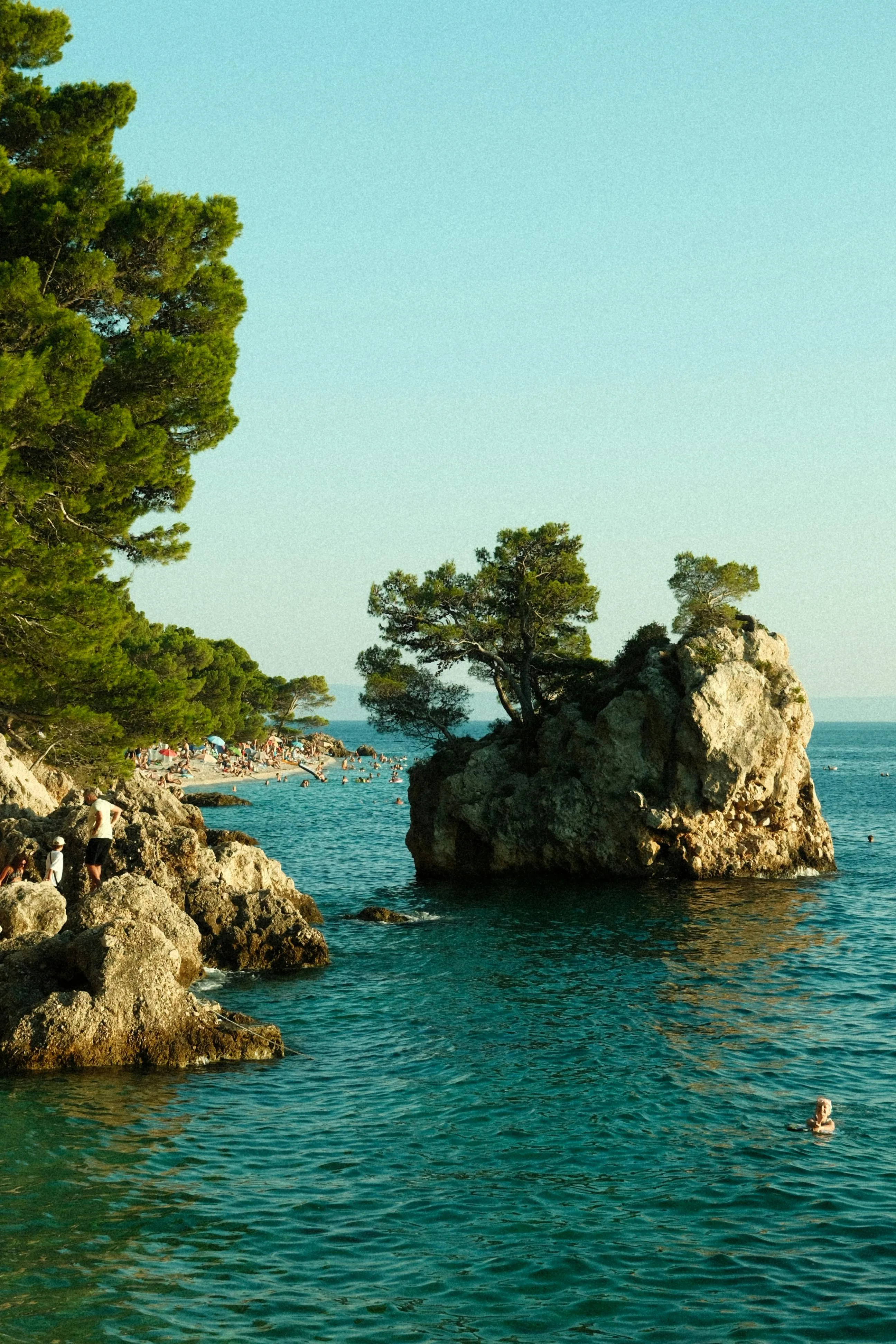
Every photograph of Brela has it in the frame. A solitary rock rising from the sea, with a pine tree growing from its top, Brela Stone has become a symbol of Croatian tourism and one of the most photographed sights on the Adriatic.
But behind that image lies a story most tourists never hear.
The rock stands around 6 metres tall, covers 120 square metres, and its coastline stretches an impressive 42 metres. Two other rocks sit nearby, but neither comes close to matching its beauty or its story.
Throughout history, right up until the early 20th century, the rock was not called Brela Stone. It was called Šakan.
The waters around the rock were once a natural habitat for the Mediterranean monk seal, a nearly extinct species that used to inhabit the entire Adriatic. In local tradition, this mysterious creature was known by various mythical names, one of them being Šakan. The monk seal eventually left Brela in search of better preserved habitats, but its legacy lived on in the name of the rock that remains a symbol of this place to this day.
Can you swim to Šakan? Yes, and many people do. Jumping from the rock is not allowed, but the act of swimming up to it and touching that stone has something special about it. As if, for a moment, you are reaching out and touching a piece of the history of this place.
Morning at Punta Rata
If you ever find yourself in Brela, set your alarm an hour earlier than you planned.
Punta Rata in the morning is a different beach. The sea is calm, almost glassy. The pebbles have not yet warmed in the sun. The pine trees filter the light in a way that does not last long, only in those first early hours.
And while you are taking it all in, somewhere on the beach Nataša is already setting out her mats.
You do not need to be in top shape to show up. You just need to show up.
Brela Body Workout, a free morning workout by the sea that local trainer Nataša has been running for years, is one of those details that makes Brela special. Fusion pilates, functional training, all of it set to the sound of waves with a view of Šakan. It runs all summer long, even through September when the crowds thin out, but those who stay know exactly why.
What Awaits You at the Beach
The sea around Punta Rata is crystal clear and consistently earns the Blue Flag award. Water temperatures in summer range between 24 and 27 degrees, warm but refreshing.
The beach is pebbly, surrounded by pine trees that provide natural shade. Water shoes are recommended, especially for children.
A few tips from the locals: arrive in the morning if you are looking for peace and quiet. Find a spot in the shade under the pines if you are planning a full day on the beach. And do not forget high SPF sunscreen, the Dalmatian sun shows no mercy.
When the Sun Goes Down
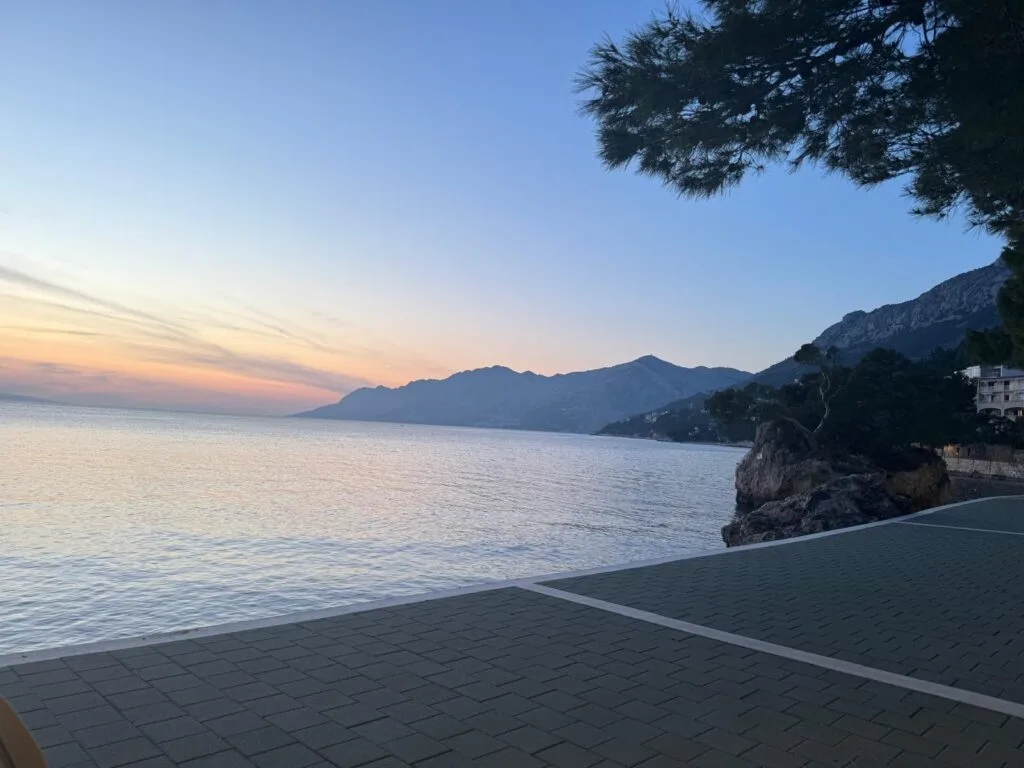
What many tourists do not know is that Brela is not just about the beach. When the sun begins to set, the village takes on a different rhythm, slower, warmer, Mediterranean.
At the small harbour of Soline, local bands play through the summer. Klapa choirs sing by the sea, and sometimes perform their own takes on foreign songs that somehow fit that evening and that water perfectly. And once a week, right at Punta Rata itself, a screen goes up for an open air cinema.

Picture this: you are lying on a cushion, the sea murmuring in the background, the sky full of stars, and a film playing on the screen. International screenings, and cartoons for the little ones too. The locals know the drill, they bring a blanket, order a glass of gemišt from the nearby café and sip it through the film while their feet still carry the warmth of a full day in the sun.
This is not a tourist attraction. This is a way of life.
Dolphins: The Bonus That Is Not in Any Guide
This is not guaranteed. But it is possible.
While you are sitting on a bench by the sea, reading a book or gazing into the distance, sometimes a dolphin leaps from the water. The locals are used to it. The tourists are left speechless.
The Adriatic around Brela is still clean and calm enough to attract dolphins. No schedule, no announcement. They come when they come. And when it happens, you understand why the Mediterranean monk seals once felt so at home here.
Where to Eat in Brela: Dalmatian Cuisine
After a day at Punta Rata, one thing is non-negotiable: dinner.
Brela is a small place, but it has restaurants and konobas that know what they are doing. If you are after genuine Dalmatian cuisine, you already know what to order: lamb or octopus cooked under the peka, slow and traditional, the way it has always been done. Black risotto so good you will order it again the next day. Grilled fish with Swiss chard, simple, fresh and perfect.

Brela hides a handful of konobas and restaurants where locals actually eat, not just tourists. Ask the residents, walk around, peek into the ones with shorter menus and longer tables. That is where you will find the real Dalmatia.
When to Visit Punta Rata?
June and September are the ideal times to visit. The sea is warm, the sun strong, but the crowds are far smaller than in July and August. Accommodation prices are lower, restaurants have tables available, and the beach has room to breathe.
July and August are peak season, the sea at its warmest, but also at its busiest. Come in the morning, claim your spot and enjoy.
May and October are for those who love quiet. The sea is a little cooler, but Brela at this time of year has a calm charm that is special in its own way. Nataša still runs her workout. The beach cinema is still on. The dolphins still come.
How to Get to Punta Rata?
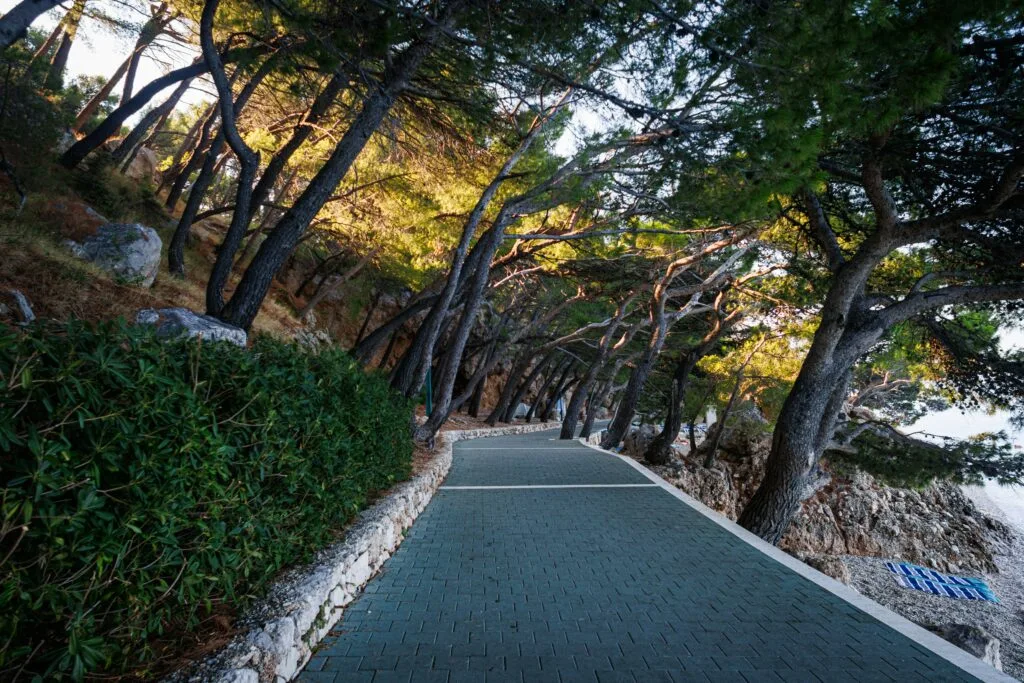
Punta Rata sits at the western end of Brela, around a 10 minute walk from the village centre.
By car: park in the centre of Brela and walk along the seafront. The path itself is beautiful and very much part of the experience.
By bus: the Split to Dubrovnik line stops in Brela. From the bus station in the village centre, the beach is about a ten minute walk.
Your Reason: You Just Have Not Found It Yet
Brela is an unusual place. Every guest arrives with a different reason, some come for Punta Rata, some for the quiet, some by chance. But almost all of them leave with the same feeling: that they need to come back. And that they know why.
Someone comes back for the morning workout by the sea. Someone for the beach cinema with a glass of gemišt. Someone for the klapa concert whose voices carry across the water while you are having dinner. Someone for that moment when the local band plays a cover of a song you have not heard in years, and it fits that evening and that sea perfectly.
Someone for the dolphin they spotted from a bench while reading a book. Someone just for that first morning when the sea was glassy and the pines smelled of summer.
Your reason, you do not know it yet. But Brela will show it to you. Brela is just one step away.
Where to Stay in Brela?
If this article has convinced you that Punta Rata deserves a visit, and it should, the next question comes naturally. Where to stay?
Apartmani Jović is located just 550 metres from Punta Rata, in a quiet part of Brela. Family apartments with a balcony and sea view, free parking and everything you need for a comfortable stay. No complications, get in touch and book your dates.